
auto batteries
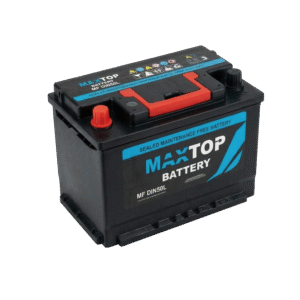
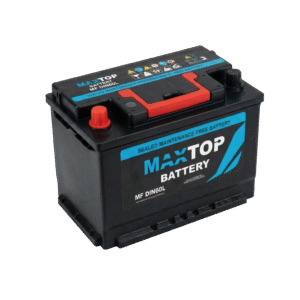
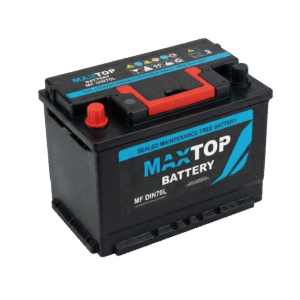
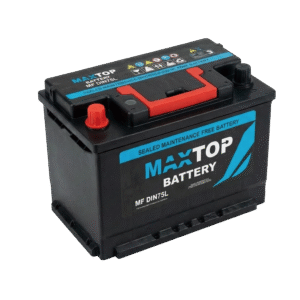
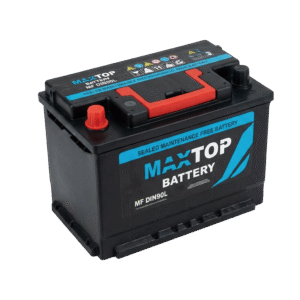
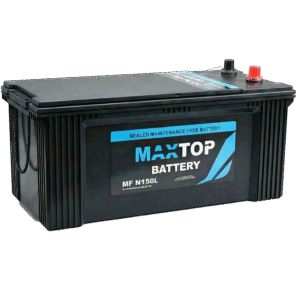
truck batteries
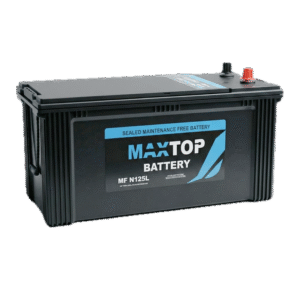
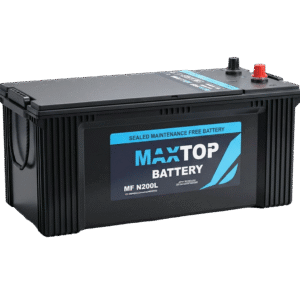
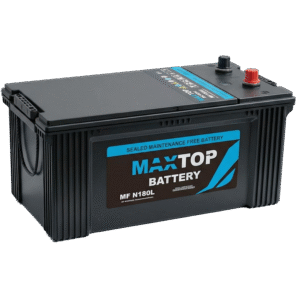
FAQ
ask us about anything
What is Nominal Voltage (Voltage, V)?
Terminology Definition: The electrical potential difference providing the power.
Passenger Cars (Sedans/SUVs): Almost all modern passenger car electrical systems are 12V.
Commercial Trucks/Heavy Machinery: Most heavy trucks and construction machinery use 24V systems. The common practice is to connect two 12V truck batteries in series to achieve 24V.
what is Capacity (Ampere-Hour, Ah)?
Terminology Definition: Ampere-hour (Ah) represents the energy storage size of the battery, much like a “fuel tank.” It indicates the total amount of power the battery can continuously supply at a specific discharge rate.
Passenger Car Example: Standard family sedans typically require a capacity ranging from 45Ah to 80Ah.
Truck Example: Heavy trucks, with their massive diesel engines and numerous onboard electrical appliances (parking AC, microwaves, extensive lighting), usually require extra-large capacity batteries ranging from 100Ah to 220Ah (such as the common MF130, N200) or even larger.
What is Cold Cranking Amps (CCA)?
Terminology Definition: This is the most critical starting metric. CCA refers to a battery’s ability to deliver a specific current for 30 seconds at a freezing temperature of 0°F (-17.8°C) while ensuring the voltage does not drop below 7.2V. The higher the CCA, the easier it is to start the engine in harsh winters.
Passenger Car Example: Ordinary small-displacement gasoline cars require about 400A – 600A; large-displacement or diesel SUVs need about 700A – 850A.
Truck Example: The massive diesel engines of trucks require tremendous instantaneous burst power, so truck battery CCAs are typically between 900A and 1200A or more.
What is Reserve Capacity (RC)?
Terminology Definition: Emergency endurance capability. It refers to the number of minutes a fully charged battery can sustain a 25A discharge current (to keep basic functions like headlights, wipers, and the ECU running) while maintaining a voltage above 10.5V if the vehicle’s alternator fails.
Example: A battery marked with an RC of 130min means that if the alternator stops working, it can support the vehicle to continue driving for over two hours.
What are the Differences Between JIS and DIN type batteries?
In the global market, battery sizes and terminal layouts are mainly divided into two standard camps. Choosing the wrong standard will result in the battery not fitting into the vehicle’s battery tray or the power cables not reaching.
1. JIS (Japanese Industrial Standard)
Mainly Applicable Vehicles: Japanese cars (Toyota, Honda, Nissan), Korean cars (Hyundai, Kia), and most Asian brand vehicles.
Appearance Features (Most obvious difference): Raised Terminals. The positive and negative terminals of JIS batteries protrude clearly above the flat top surface of the battery.
Naming Convention Examples: 55D23L, N70, NX120-7, etc. The letters represent width and height, while the numbers represent length or performance level.
2. DIN (Deutsches Institut für Normung) – European Standard
Mainly Applicable Vehicles: German cars (VW, Mercedes, BMW, Audi), European cars (Peugeot, Volvo), and an increasing number of American and globalized vehicle models.
Appearance Features (Most obvious difference): Recessed Terminals. The positive and negative terminals of DIN batteries are “hidden” in grooves on the top of the battery, sitting flush with the battery lid (designed to adapt to the compact hood space of European cars and prevent terminal short-circuiting). In addition, DIN batteries usually have a hold-down lip at the bottom for chassis clamp mounting.
Naming Convention Examples: DIN70, MF57412, L3, H6, etc.
What is Standard Lead-Acid Battery (Standard SLI / Flooded or Maintenance-Free MF)?
Technical Features: The inside is filled with liquid sulfuric acid electrolyte. They are divided into traditional types that require adding distilled water and completely sealed Maintenance-Free (MF) types.
Functional Positioning: SLI stands for Starting, Lighting, and Ignition. It excels at providing a large instantaneous current to start the engine but is not designed for deep discharging.
Applicable Scenarios: Traditional combustion engine vehicles without the “Start-Stop” function. They offer high cost-effectiveness and mature technology.
What is EFB battery (Enhanced Flooded Battery)?
Technical Features: It still uses liquid electrolyte, but the plates are thicker, and a special polyester fiber mesh (scrim) is added to wrap the positive plates to prevent the active material from shedding.
Functional Positioning: The charge/discharge cycle life is 2 times that of a standard lead-acid battery, and it features stronger charge acceptance capability.
Applicable Scenarios: Japanese or some German vehicles equipped with entry-level Start-Stop systems. When the vehicle shuts off at a red light, the EFB battery can stably power onboard devices and quickly restart the engine when the light turns green.
What is AGM battery (Absorbent Glass Mat) Battery?
Technical Features: Belongs to high-end Valve Regulated Lead-Acid (VRLA) batteries. There is no free-flowing liquid acid inside; all the electrolyte is absorbed in the ultra-fine glass fiber mats. Therefore, it is completely leak-proof and can even be installed at an angle.
Functional Positioning: It is currently the top-tier technology in automotive lead-acid batteries. The cycle life is 3-4 times that of standard batteries, with extremely high CCA (cold cranking capability) and excellent deep charge/discharge capabilities.
Applicable Scenarios: High-end luxury cars (like Mercedes-Benz, BMW, Audi, Porsche) equipped with advanced Start-Stop systems with regenerative braking. Additionally, vehicles with a massive amount of electronic equipment (such as premium audio, multi-screens, air suspension) must also use AGM batteries.
How to choose correct battery type for my car?Standard Lead-Acid (SLI), EFB, or AGM battery for my car?
Determining whether your vehicle needs a Standard Lead-Acid (SLI), EFB, or AGM battery is actually quite simple. By following these 4 straightforward steps, you can accurately pinpoint the exact battery type you need:
Method 1: The Core Criteria — Does your car have a “Start-Stop” feature?
This is the most critical factor in determining the battery type, as the Start-Stop system puts tremendous strain on the battery.
No Start-Stop Feature: 👉 Use a Standard Lead-Acid Battery
If you drive an older model, or if your car wasn’t equipped with the feature that automatically shuts off the engine at red lights, then purchasing a mature, highly cost-effective standard Maintenance-Free (MF) battery is perfectly sufficient.Has Start-Stop, but NO Regenerative Braking: 👉 Usually uses an EFB Battery
These systems are relatively basic. For instance, many Japanese cars (Toyota, Honda, Mazda, etc.) with Start-Stop features typically come factory-equipped with EFB batteries.Has Start-Stop AND Regenerative Braking: 👉 MUST use an AGM Battery
These systems are usually found in luxury brands (like Mercedes-Benz, BMW, Audi, Porsche, Land Rover). When braking, the driver will feel a distinct drag; this is the alternator charging the battery with a high current. Only top-tier deep-cycle AGM batteries can withstand this high-frequency, high-current charging and discharging.
Method 2: The Most Accurate Method — Check the Original Battery’s “Identity Label”
This is the most foolproof method. Open the hood or trunk, grab a flashlight, and inspect the sticker on your old battery for the following keywords:
If you see these terms 👉 It is an AGM Battery
Clearly states “AGM” (Absorbent Glass Mat)
States “VRLA” (Valve Regulated Lead-Acid)
If you see these terms 👉 It is an EFB Battery
Clearly states “EFB” (Enhanced Flooded Battery)
States “ISS” (Idle Start-Stop)
Some Japanese cars will use specific Start-Stop model codes like “Q-85”, “S-95”, or “T-110”.
If you see these characteristics 👉 It is a Standard Battery
The label only shows the Capacity (Ah) and Cold Cranking Amps (CCA), with no mention of AGM or EFB.
It states “MF” (Maintenance-Free) or “SMF” (Sealed Maintenance-Free).
(Note: If a battery says “Start-Stop” but doesn’t explicitly specify AGM or EFB, it is highly likely an EFB battery.)
Method 3: The Hidden Clue — Observe the “Installation Location”
Where the battery is installed in the vehicle can also reveal its true identity, primarily because AGM batteries are highly sensitive to extreme heat.
Installed in the trunk, under the spare tire, or under a seat: 👉 Highly likely an AGM Battery
European luxury cars often hide the battery in the trunk to balance the front-to-rear weight distribution and to keep the AGM battery far away from the intense heat of the engine bay (e.g., BMW 3 Series/5 Series, Mercedes GLE).Installed in the engine bay (under the hood): 👉 Mostly a Standard or EFB Battery
Traditional liquid electrolyte batteries (Standard and EFB) have a better tolerance for high temperatures. If you see the battery under the hood, it is usually one of these two. (Note: A few American or German cars do put AGM batteries in the engine bay, but they are always tightly wrapped in thick thermal insulation or housed in a heavy-duty plastic box).
Method 4: Rule of Thumb — Guessing by Vehicle Brand and Tier
If you don’t have visual access to the car right now, you can make an educated guess based on the vehicle brand:
German Luxury Brands (Mercedes, BMW, Audi, Porsche, etc.): If manufactured within the last 10 years, over 95% come standard with an AGM battery.
Mainstream Japanese/Korean Brands (Toyota, Honda, Mazda, Nissan): If equipped with Start-Stop, they almost exclusively use EFB batteries. If there is no Start-Stop, it’s a Standard battery.
Economy/Domestic Vehicles: Older models mostly use Standard batteries. For newer models with Start-Stop, EFB batteries are common, while a few high-end electric vehicles (EVs) are beginning to use AGM for their 12V auxiliary batteries.
⚠️ Ultimate Warning: The Rules of Upgrading and Downgrading (Crucial!)
Once you have identified your original battery type and are ready to buy a replacement, remember this golden rule of the industry: You can upgrade (be upwardly compatible), but you must NEVER downgrade (be downwardly compatible)!
If the original is a Standard Battery: You can replace it with a standard battery, or you can spend a bit more to upgrade to an EFB or even AGM (for a longer lifespan and potentially better audio performance). Just ensure the physical dimensions match.
If the original is an EFB Battery: You can replace it with an EFB, or upgrade to an AGM. You must NEVER downgrade to a Standard battery! (Doing so will cause the plates to sulfate and the battery to fail within months due to the frequent Start-Stop cycling).
If the original is an AGM Battery: You CAN ONLY and MUST replace it with another AGM battery! Never substitute it with an EFB or standard battery. Not only will the new battery have an extremely short lifespan, but it could also cause ECU errors, disable the Start-Stop system, or even burn out certain electrical modules.